
This comparison looks at ten B2B platforms side by side. For the ranked all-segment list, see the best GEO tools; to build a stack discipline by discipline, see AI SEO tools for B2B SaaS.
Getting mentioned by AI is one thing. Knowing what to do about it is another, and very few tools explain that part. So we compared all ten on the work that comes after the dashboard. Which ones optimize your content, which ones show you the third-party sites AI actually trusts, and which ones turn recommendations into demos that drive revenue.
The shortlist spans Citedintel, Profound, Peec AI and Searchable, with Scrunch AI, BrightEdge and four others rounding out the ten. The table below compares them side by side.
What we compared, and why the dashboard is the easy part
Every tool here can tell you whether ChatGPT, Claude or Perplexity mentions your brand. That part is now table stakes. The gap opens after the report loads, and three jobs separate a monitoring line item from a tool that moves pipeline:
- Content optimization. Does the tool turn a visibility gap into a draft you can publish, and does it check that the new page will not collide with a page you already win with?
- Third-party intelligence. AI answers lean heavily on review sites, comparison posts and industry lists. Does the tool name the specific outside sources shaping your answers, so you know which ones to go win?
- Recommendation outcomes. A mention buried at position twelve is decoration. Does the tool measure whether you climb the answer, and whether the answer picks you first?
If the difference between being named, being sourced and being picked is new territory, read our explainer on mentions, citations and recommendations first. Every entry below is judged against all three.
The ten, side by side
| Tool | Entry price | Strongest at | The catch |
|---|---|---|---|
| Citedintel | Free (2 audits); Pro $375/mo runs the full loop | The full loop: audit, drafted fixes with an overlap guard, re-measurement | AI answers only; bring your own SEO suite |
| Profound | $99/mo (single engine) | Enterprise reporting and citation analysis | Reports, not fixes; multi-engine costs $399/mo |
| Peec AI | $95/mo | Clean multi-market tracking, unlimited seats | No drafted content, no overlap checks |
| Searchable | $125/mo | Tracking plus AI article generation in one plan | Article credits burn fast at scale |
| Semrush AI Toolkit | $99/mo per domain | Adding AI visibility to an existing Semrush stack | Priced per domain, thin on next steps |
| Writesonic GEO | Self-serve tiers | Content production plus visibility in one login | Two products in one; depth varies by half |
| Scrunch AI | $250/mo | Agent readiness and SOC 2 posture for security-minded teams | Steep entry for a first tool |
| Otterly.AI | $29/mo | Budget prompt tracking with link citation data | Weekly refresh; analysis stays on you |
| AthenaHQ | $295/mo | Credit-based tracking with deep prompt volume | Credit math takes real forecasting |
| BrightEdge | Custom, annual | AI tracking inside a full enterprise SEO platform | Procurement-grade buying for an AI-first need |
1. Citedintel
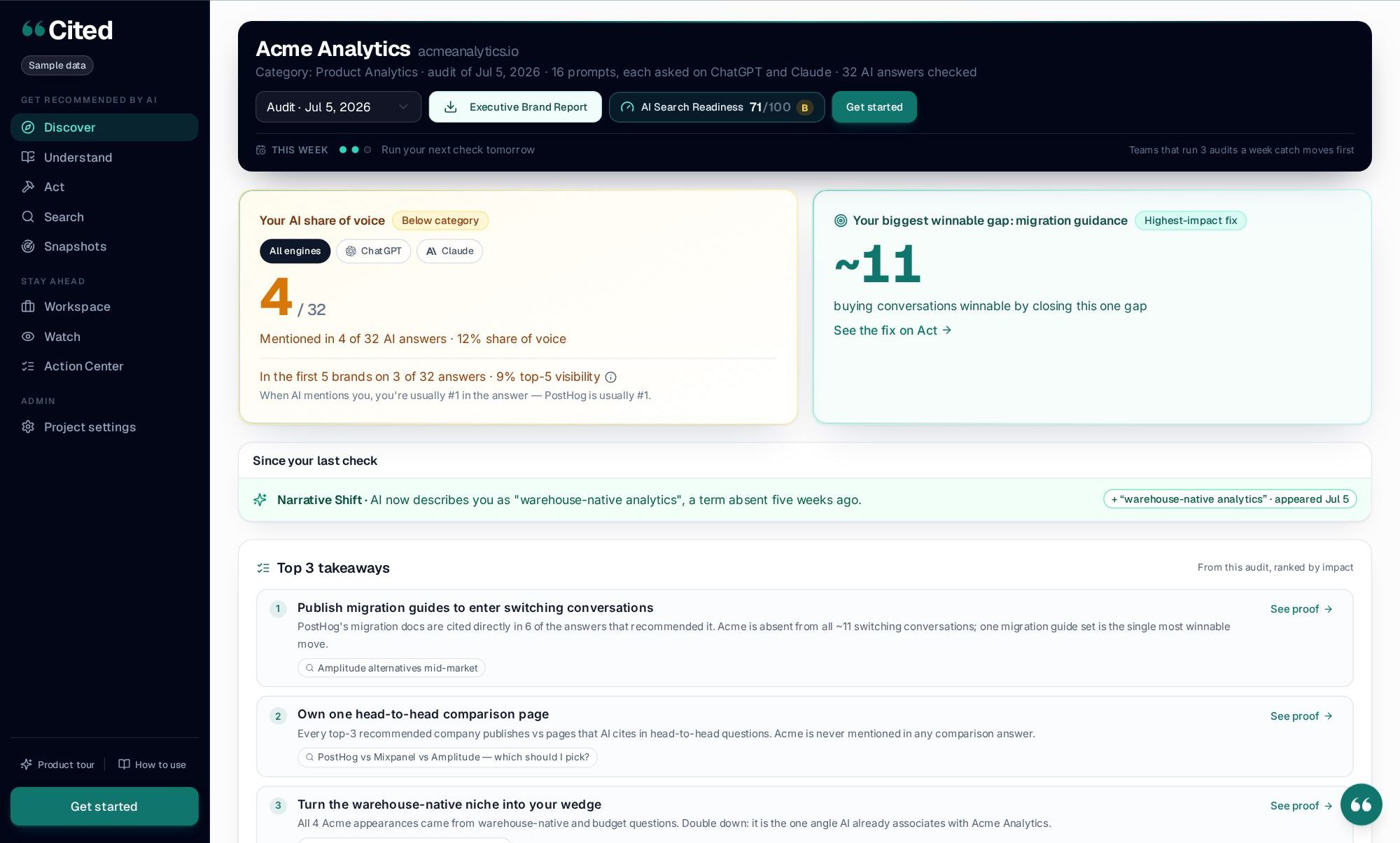
Citedintel audits real buying prompts and shows who AI recommends, at what position, backed by whose sources. A citation mix line points your next move at on-site content or outside coverage.
The prompt set is generated from your ICP and staged by persona and funnel stage, and after a fix ships newer audits re-ask the same prompts to show the before and after.
Every draft passes a cannibalization guard that flags overlap with pages you already rank with; none of the other nine tools run that check.
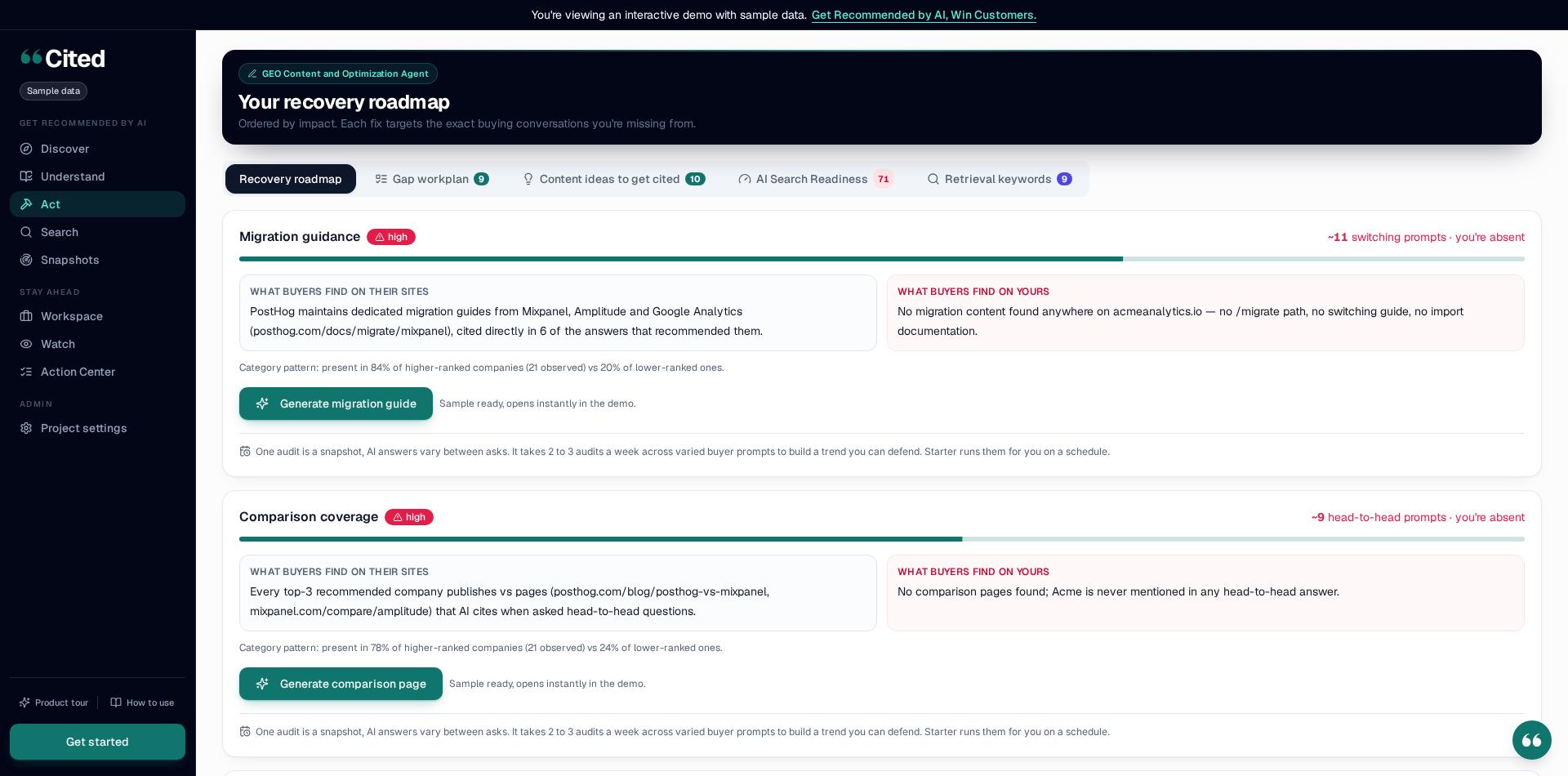
Where it fits: enterprise programs scoped per use case, funnel stage and market; every audit stores the answers and citations behind your leaderboard, then it is fix, verify, repeat.
The candid gap: the focus on AI answers is deliberate; it pairs with your SEO suite. The real gap is SOC 2; if your review needs it today, Scrunch has it.
Pricing: Enterprise programs on annual terms, scoped per use case, funnel stage and market, with intelligence and execution in one fee; agency plans are scoped on a demo call; Starter (free) and Pro ($375/mo) serve early-stage brands.
2. Profound
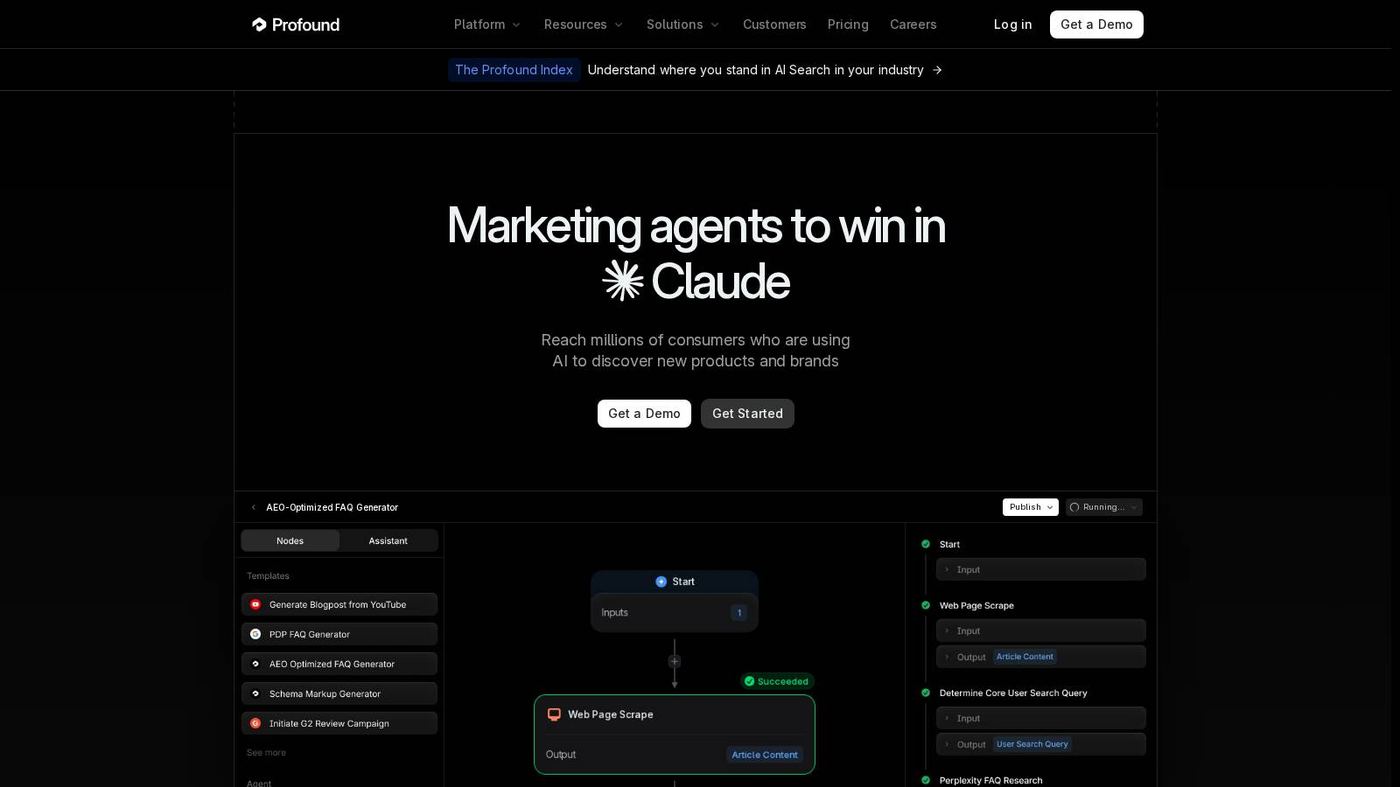
Profound is the reporting heavyweight. Share-of-voice tracking, citation source analysis and agent analytics presented well enough to hand straight to a VP, plus security reviews that clear enterprise procurement. Teams that need board-ready AI visibility reporting across many brands buy it and are happy.
The data moat is real. Prompt Volumes draws on more than 1.5 billion real user conversations, filterable by intent and demographic, so content bets follow measured demand instead of hunches. Agent Analytics reads your server logs rather than a JavaScript tag, showing which pages GPTBot and its peers fetch, and prompt data exports as CSV or JSON for the BI stack. SOC 2 Type II and SSO arrive with the enterprise tier.
Where it fits: enterprise marketing orgs with an analyst who owns the follow-through, because Profound describes the gap and leaves the fixing to you.
The catch: the $99 Starter covers a single engine and one seat; multi-engine coverage starts at $399. And nothing in the product drafts the fix. Our head-to-head is at Citedintel vs Profound.
3. Peec AI
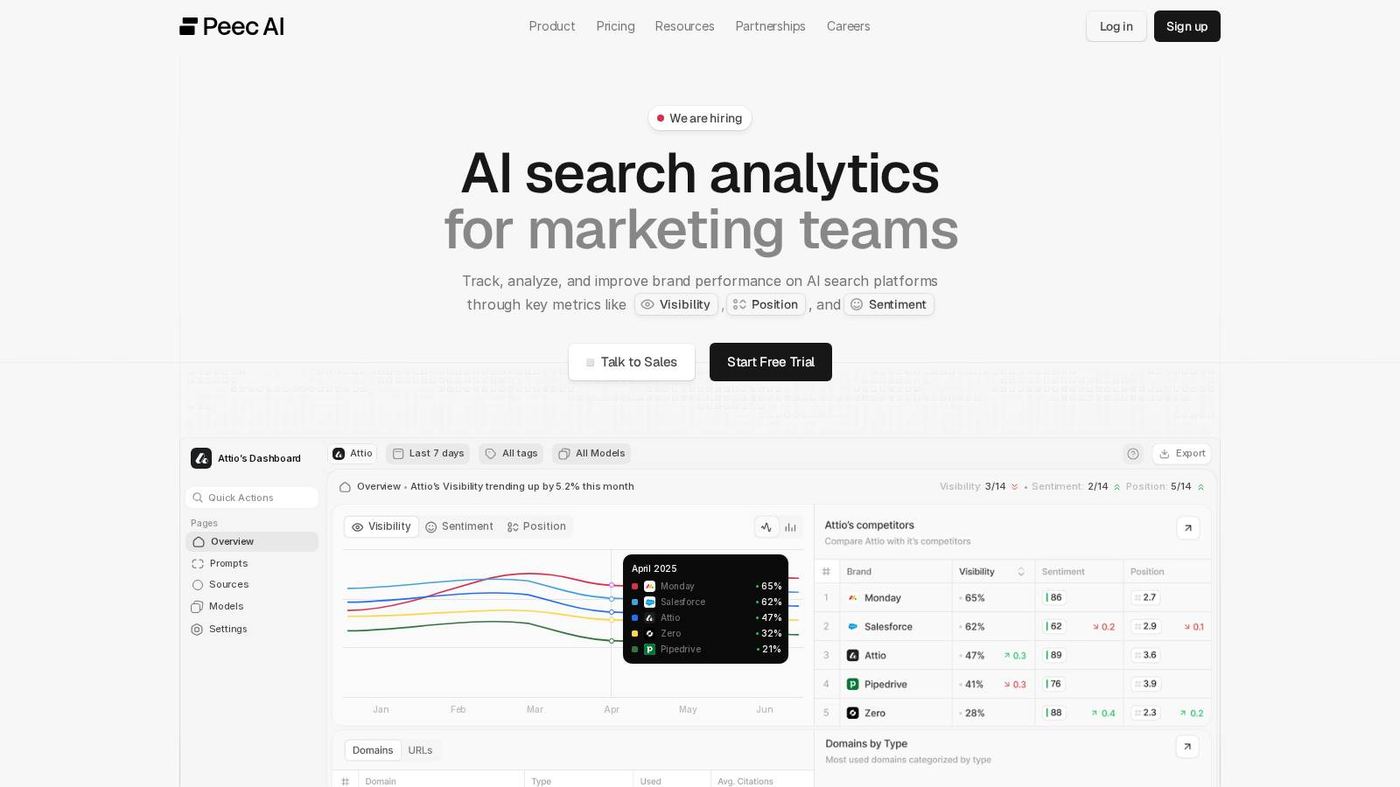
Peec earned its mid-market reputation with a clean interface, per-market workspaces and one pricing decision rivals still have not copied: unlimited seats on every tier. It also separates the URLs an answer used from the URLs it merely cited, a distinction most trackers blur and analysts appreciate.
Coverage runs deeper than the price suggests: six default engines including Google AI Mode, AI Overviews and Microsoft Copilot, tracked daily, with each self-serve tier picking three of them. An MCP integration puts the data inside Claude or Cursor for your own analysis, a Looker Studio connection opens up on the Advanced tier, and API access with SSO sits on Enterprise. The 7-day trial asks for no card.
Where it fits: marketing teams and agencies that want several people in the tool without a per-seat negotiation.
The catch: tracking is where it ends. No drafted content, no overlap checks, no verification loop. Comparison at Citedintel vs Peec. Weighing a switch? The top Peec AI alternatives for agencies ranks ten options.
4. Searchable
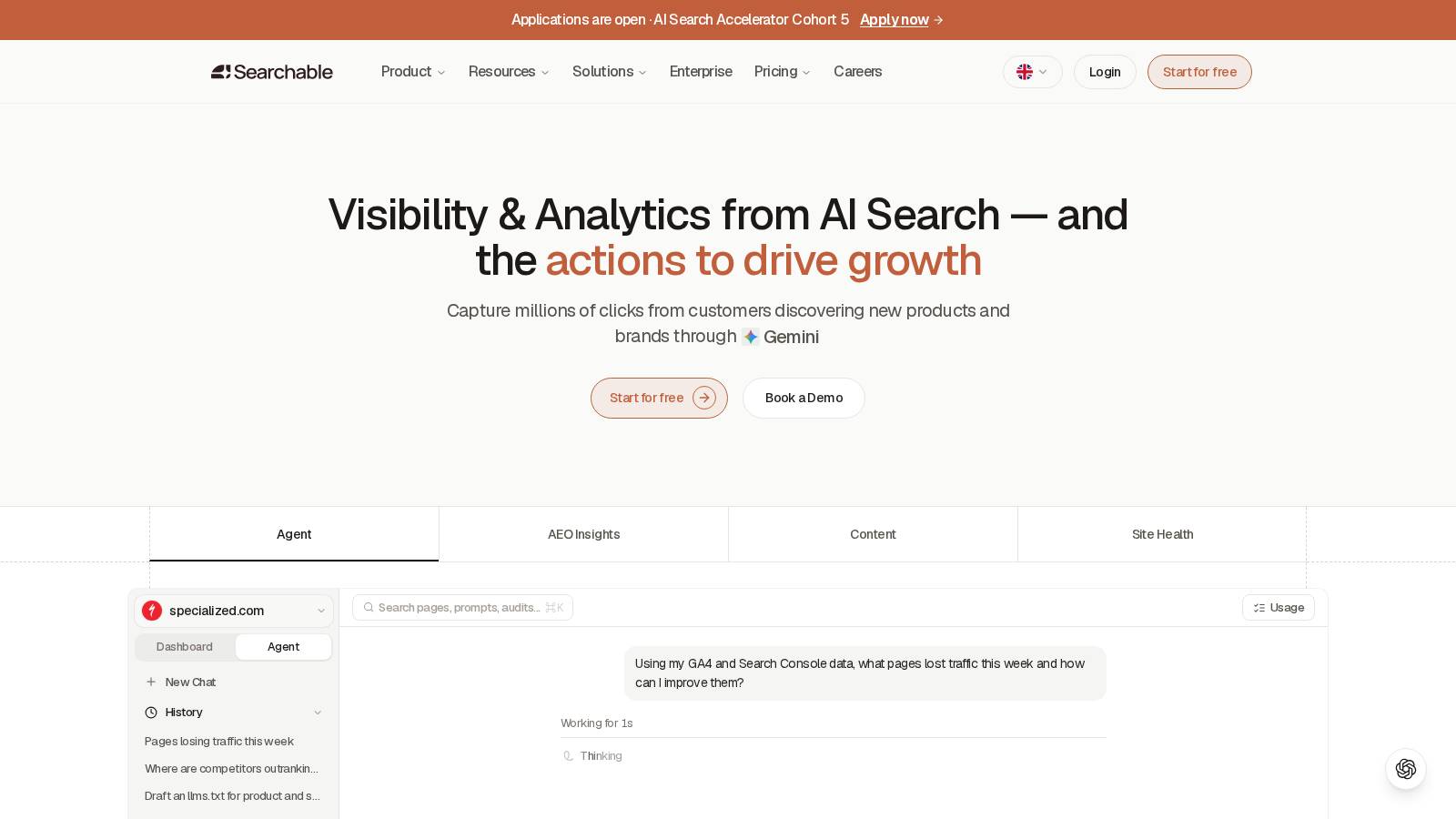
Searchable's pitch is one subscription for both halves of the job: prompt tracking plus AI article generation, with site audits included. The Professional plan carries 100 tracked prompts and 20 generated articles a month, which suits a lean team publishing steadily.
Under the bundle sits a real execution layer. A live Site Health score flags the schema and crawlability issues that block citations, an AI agent turns workspace data into content briefs, and the Actions queue exports work straight to Linear. Standard integrations cover GA4, Search Console, WordPress, Webflow and Framer; HubSpot and Salesforce sit on custom plans. The $400 Scale tier lifts limits to 500 prompts, 80 articles and 1,000 page audits, with API access.
Where it fits: small B2B teams that want tracking and content production from one vendor and publish at a modest cadence.
The catch: the article credits are the ceiling. A content-led strategy exhausts 20 articles quickly, and scaling to the $400 tier changes the budget conversation. Head-to-head at Citedintel vs Searchable.
5. Semrush AI Toolkit
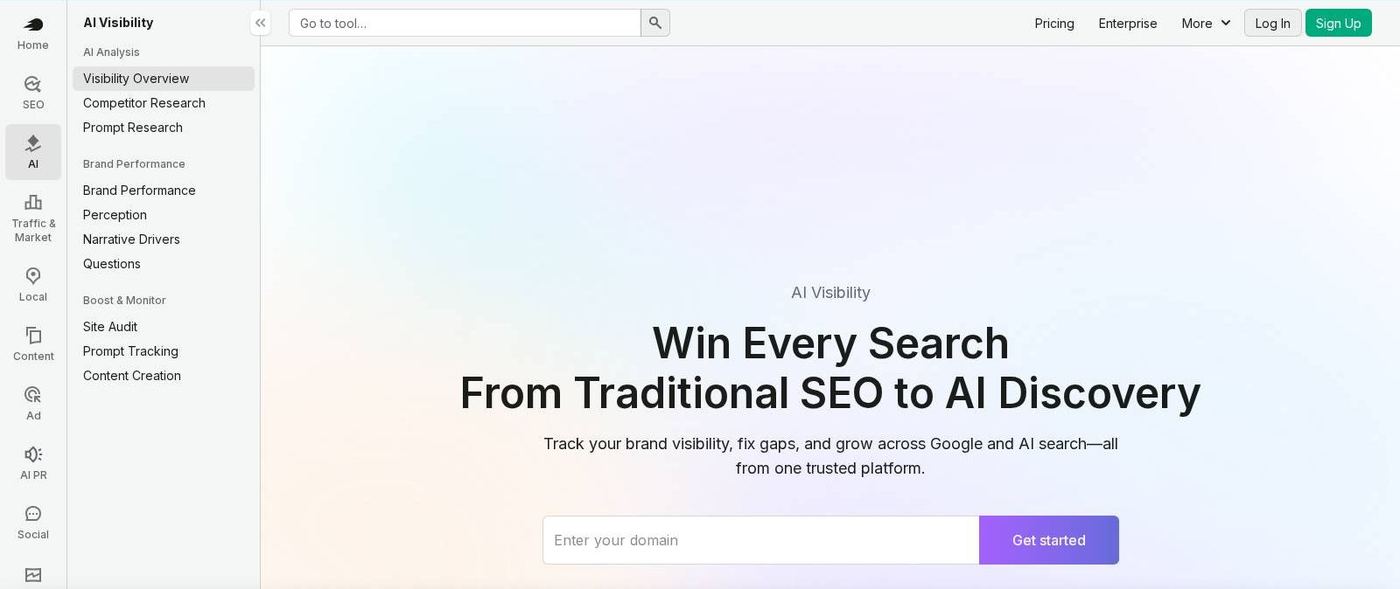
If your team already lives in Semrush, the AI Toolkit is the lowest-friction entry in this list: a $99 add-on per domain that surfaces AI visibility and sentiment beside the SEO data you already trust. Procurement is a checkbox instead of a new vendor review.
What the $99 buys is broader than a score: an AI Visibility Score benchmarked 0 to 100 against rivals, sentiment split by feature category, geographic breakdowns, and an AI Search Site Audit that flags the crawler barriers keeping your pages out of answers. The base plan tracks 25 prompts daily across five engines, ChatGPT through Perplexity; 50 more prompts cost $60 a month, and each additional domain is another $99.
Where it fits: SEO-led teams testing whether AI search deserves standalone budget.
The catch: per-domain pricing multiplies for portfolios, and the toolkit reports more than it directs. Full comparison at Citedintel vs Semrush.
6. Writesonic GEO
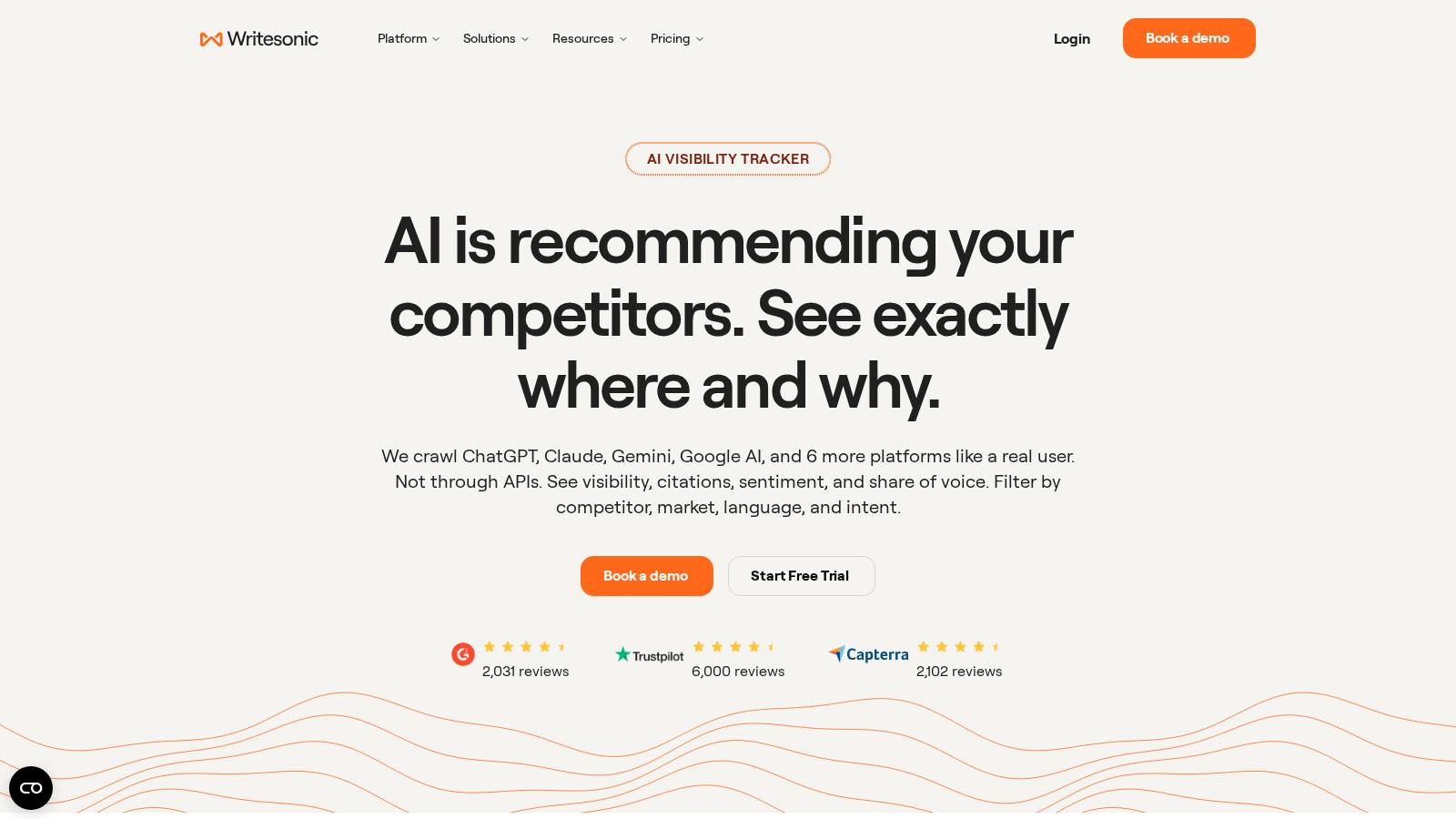
Writesonic came from AI writing and added visibility tracking, so it attacks the problem from the opposite direction to the trackers. The draw is one login where a small team monitors AI answers, then produces the content that responds, without exporting between tools.
The tiering rewards attention. The $99 Starter tracks ChatGPT only, and Basic at $249 adds two more engines. The full ten-engine roster, Meta AI and DeepSeek included, is enterprise territory. The stronger B2B feature is Cloudflare-based crawler analytics showing which AI bots visit which pages, server-side data most analytics setups never see, plus an Action Center that ranks citation gaps and technical fixes. A 7-day trial needs no card.
Where it fits: content-led teams that already need a writing assistant and would rather extend it than buy a separate tracker.
The catch: when one product spans two jobs, depth varies by half. Track how its visibility data holds up against a dedicated tracker before making it your only source of truth.
7. Scrunch AI
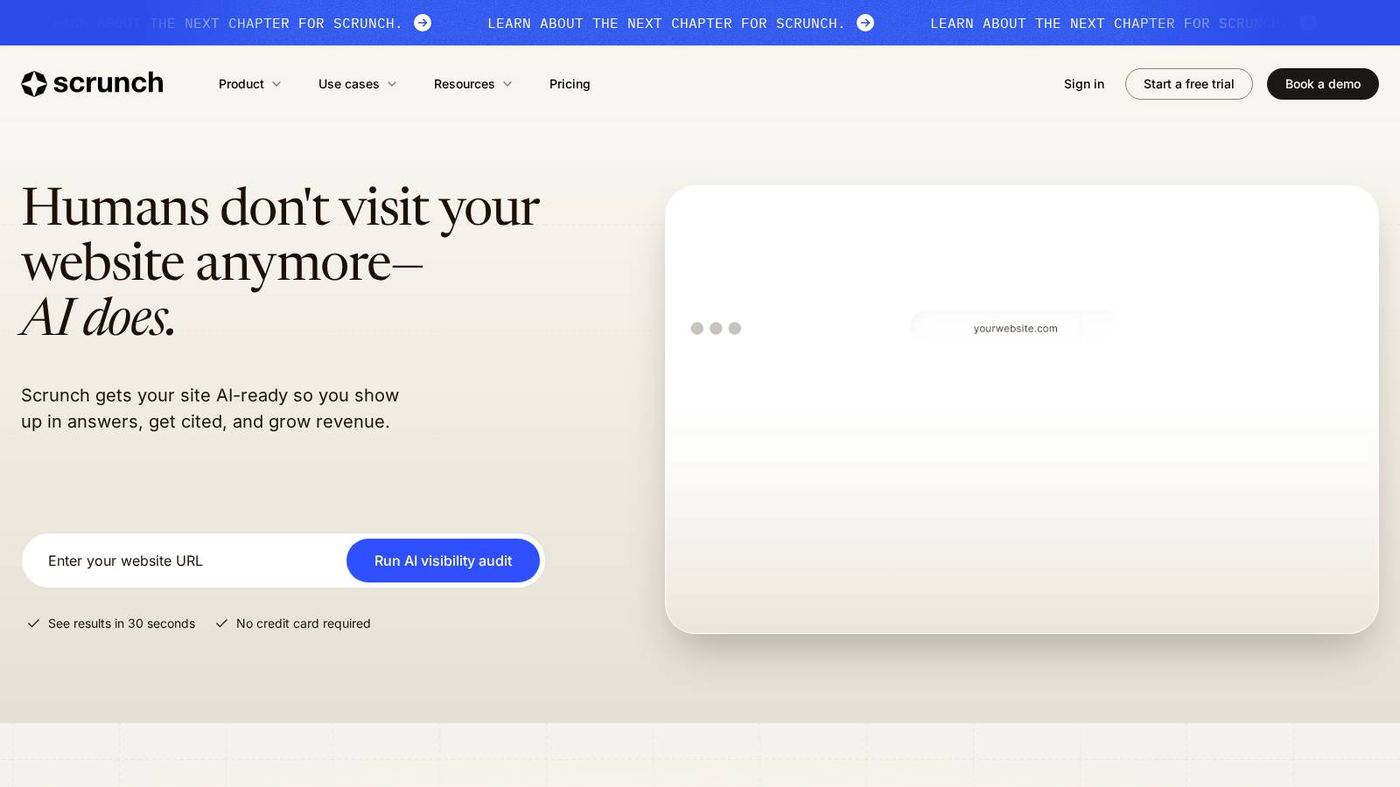
Scrunch stands out for a framing the rest of the list ignores: AI agents are visitors, and your site has an experience problem for them. Alongside prompt tracking across eight engines, it audits how agents parse your pages, with SOC 2 posture that matters in regulated deals.
The Agent Experience Platform is the differentiator. Deployed at the CDN edge through Cloudflare Snippets, Akamai EdgeWorkers or CloudFront Functions, it detects AI agent traffic and serves a token-light, structured version of each page while humans keep seeing your normal site, with no CMS migration involved. Agent traffic analytics show which bots crawl what and why, and deployment stretches to private cloud or on-premise when the security review demands it.
Where it fits: B2B companies in security-sensitive categories where the buying committee asks about compliance before pricing.
The catch: $250 entry for 125 prompts is a committed purchase, not an experiment.
8. Otterly.AI
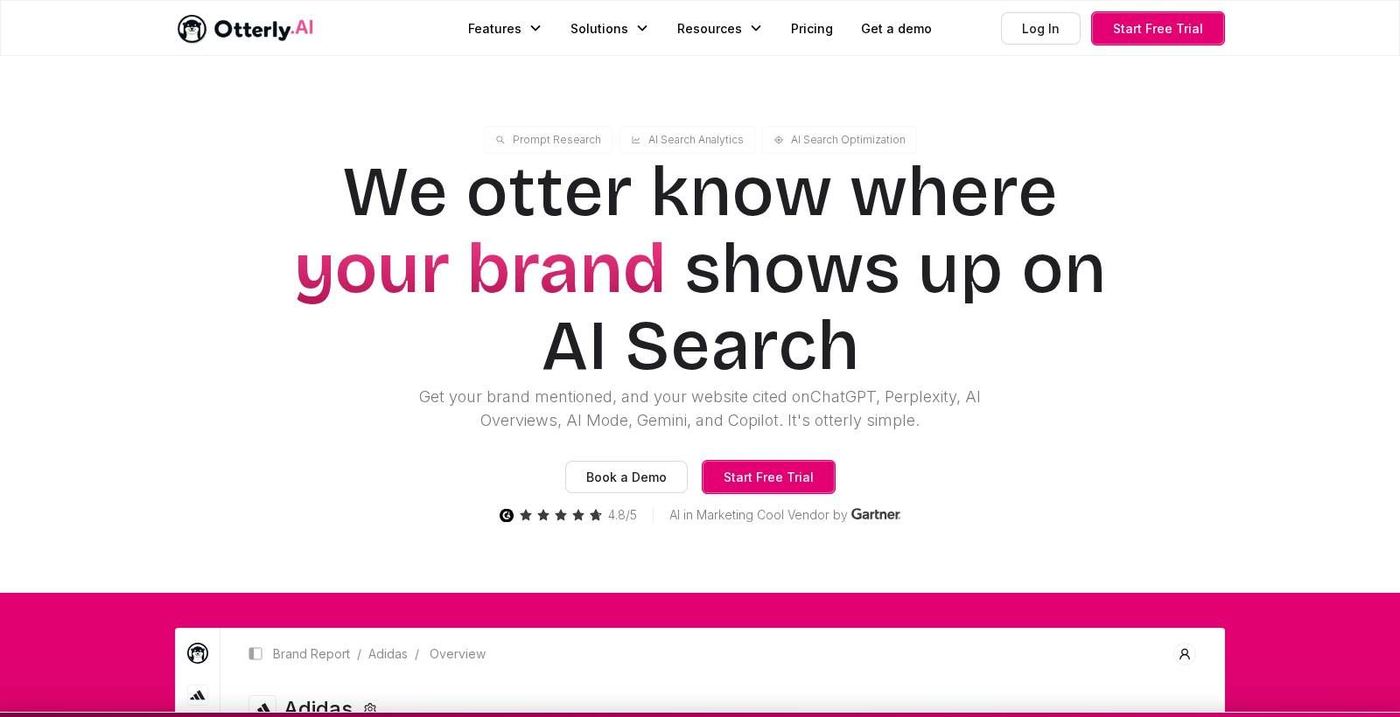
Otterly answers a fair question: what if you only want to know where you stand, for less than a lunch budget? At $29 it tracks your prompts and shows the link citations behind answers, refreshed on an automated schedule.
Where it fits: solo marketers and small teams building a first baseline before requesting real budget.
The 2026 refresh widened the base: every plan now tracks four engines rather than the big three alone, Microsoft Copilot included, and even Lite carries 1,000 GEO URL audits a month scoring pages on 25+ AI-readiness factors. Gemini, Google AI Mode and Claude are paid add-ons. The $189 Standard tier adds a public API, an MCP server, a Looker Studio connector and unlimited client workspaces, which is why small agencies gravitate to it.
The catch: 15 prompts on Lite and no diagnosis. You will outgrow it the week an executive asks what to do about the numbers. Comparison at Citedintel vs Otterly.
9. AthenaHQ
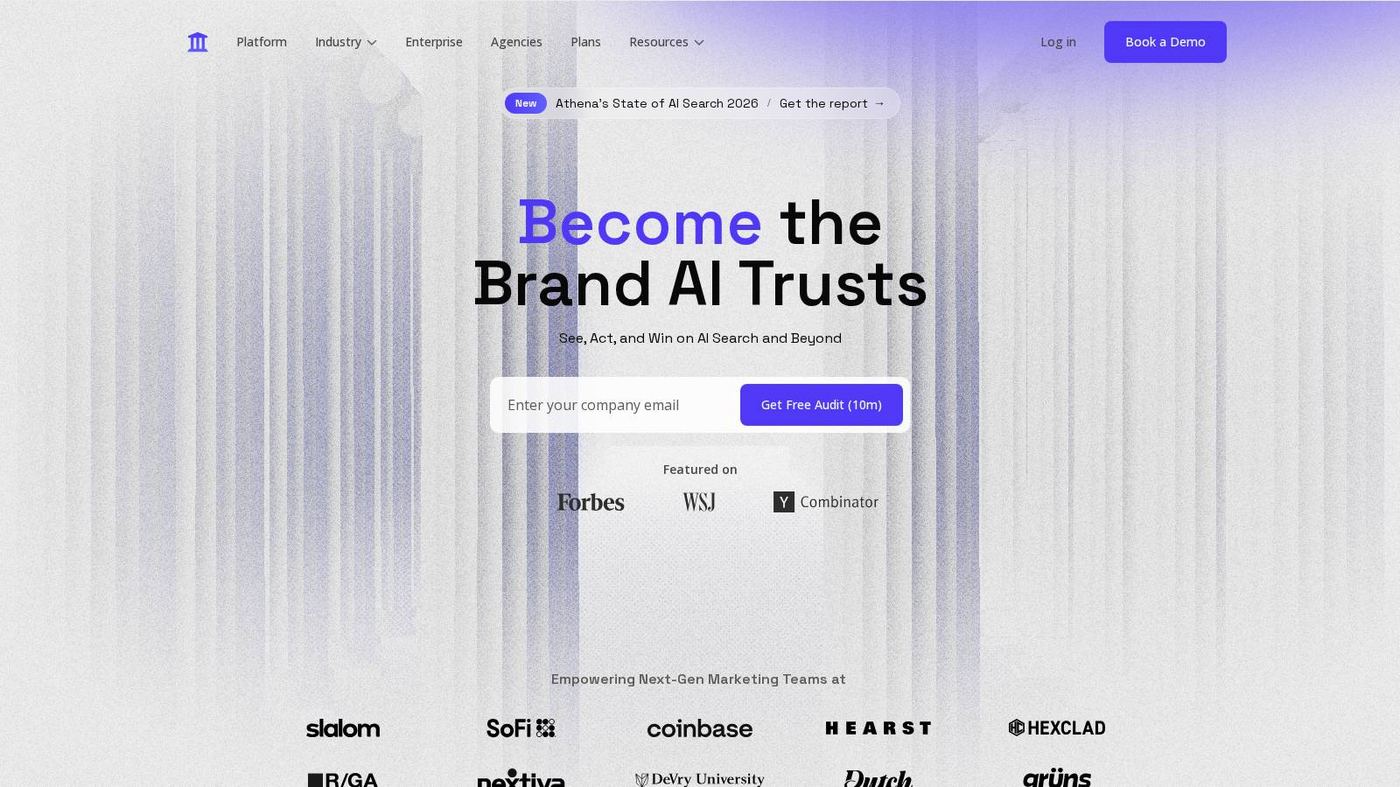
AthenaHQ runs a credit model: $295 buys 3,600 monthly credits to spend across prompts and engines however you like. For teams with a defined prompt set across several markets, that flexibility beats fixed tiers.
Where Athena earns its slot for B2B commerce teams is the wiring: Shopify, Webflow, GA4 and Search Console integrations connect AI citations to the sessions and orders behind them, and a free Essential tier with 300 credits lets you test the model before committing $295. Starter coverage spans eight named engines, ChatGPT through Grok, and a discrepancy review flags the claims engines get wrong about your product.
Where it fits: operators who know their tracking volume and want to allocate it precisely across markets.
The catch: credits reward forecasting and punish guesswork; a broad prompt sweep can empty the balance in week one. Head-to-head at Citedintel vs Athena.
10. BrightEdge
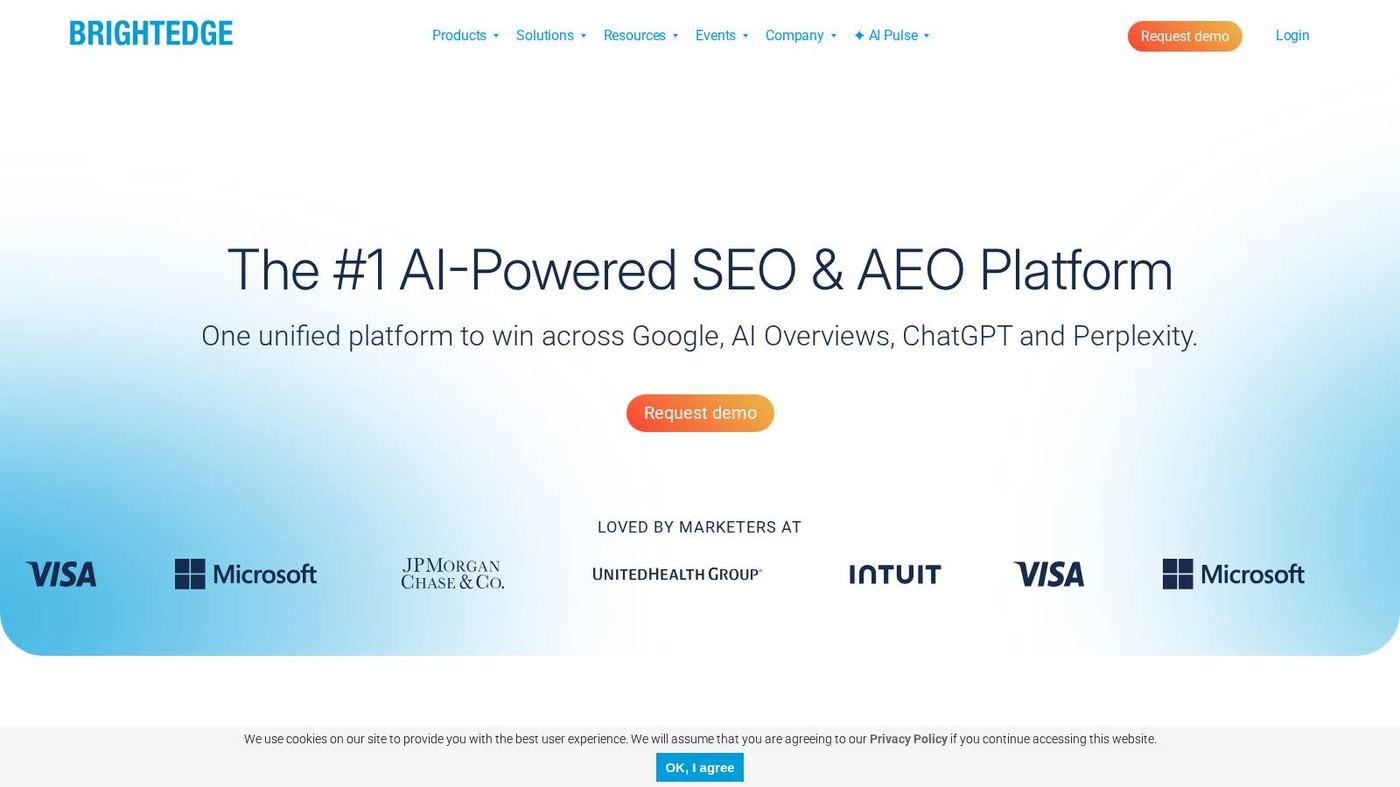
BrightEdge is the incumbent play: a full enterprise SEO platform that now tracks AI search surfaces alongside organic rankings. For a large organization that wants one throat to choke across search, consolidation is the feature.
The AI story rides on infrastructure smaller rivals cannot match: the Data Cube's 4 billion plus data points and a Generative Parser that has tracked AI Overviews since they launched. BrightEdge's own parser data also makes the case for separate tracking: only about 17% of sources cited in AI Overviews rank in the organic top 10. AI Catalyst adds prompt-level citation tracking with sentiment, Copilot drafts the briefs, and Autopilot pushes automated on-site optimizations.
Where it fits: enterprises with an existing BrightEdge contract, or those consolidating tools under one annual agreement.
The catch: custom pricing, annual terms and a platform footprint sized for enterprise SEO teams. Buying it only for AI visibility is buying a truck to carry a briefcase.
Match the tool to your stage
Establishing a baseline: run a free visibility check before you buy anything, then follow our audit walkthrough to read the results. Otterly keeps the lights on for $29 if budget is the constraint.
Building the habit: anchor this decision on the loop, not the line item. Citedintel is built for enterprise brands running AI search as a program across use cases, funnel stages and markets (Starter and Pro give early-stage brands a first look), and every audit ends the same way: fixes drafted with the overlap guard, published, then re-measured so you can show what moved. Peec fits when several teammates need seats, Searchable when content production belongs in the same bill.
Scaling the program: boardroom reporting is where Profound and BrightEdge earn their contracts, and Scrunch carries the compliance posture regulated categories ask for. If the mandate is outcomes rather than reporting, Citedintel runs the same audit-to-fix loop at enterprise and agency volume. Whichever you choose, run it against the plays in our B2B SaaS playbook for AI search so the tool serves a strategy instead of replacing one.
One warning before you turn on content optimization
Several tools on this list will happily generate articles. Almost none of them check what those articles do to the pages you already rank with. When a new AI-drafted page overlaps a page that was already winning citations, the two split authority and both sink, and the dashboard that suggested the article rarely connects the drop to its own advice. We wrote up how unchecked AI writing erodes the visibility it was meant to build, and it is the single most common self-inflicted wound we see in audits. Whatever tool you pick, put an overlap check between the draft button and the publish button.
The category is young, pricing shifts quarterly, and every vendor above ships fast. Verify the numbers on their pricing pages before you sign, and if you want to see your own leaderboard before choosing, two Citedintel audits are free.
Frequently asked questions
What is an AI search optimization tool?
Software that tracks how AI assistants describe and recommend your brand in buying conversations, then helps you improve those answers through your own content and the third-party sources the answers cite.
Which tool should a small B2B team start with?
Run a free visibility check first so you know the size of your gap. From there, choose by the job: Citedintel if you want the full loop of drafted fixes, overlap checks and re-measurement; Peec for unlimited seats; Searchable if you also want article generation. Otterly at $29 works when budget is the blocker.
Do these tools replace SEO software?
No. They cover AI answers, while SEO suites cover rankings, backlinks and crawls. Semrush and BrightEdge bundle both worlds; the AI-first tools expect you to keep your SEO stack.
How do I know an AI search tool is paying for itself?
Watch four numbers between audits: your average answer position, Top-5 rate, share of first recommendations, and how much of your citation evidence comes from your own site. If none of them trend up after your published fixes, the tool is reporting rather than working.
How much should a B2B business budget for AI search optimization?
Entry tracking starts at $29 a month and enterprise reporting runs to four figures. Judge the middle on workflow rather than sticker: a tracker leaves diagnosis and content work as headcount you pay for elsewhere, while a platform that drafts, guards and re-measures replaces part of that spend. Citedintel prices enterprise programs per project, one use case x one funnel stage x one market, so cost tracks the buying conversations covered rather than seats; Starter (free) and Pro ($375/mo) serve early-stage brands. Verify current pricing with each vendor; the category reprices often.
Which AI engines matter most for B2B buyers in 2026?
ChatGPT and Google AI Overviews carry most B2B evaluation traffic today. Perplexity matters in research-heavy evaluations and Copilot in Microsoft-heavy accounts. Gemini's share keeps growing. Engine coverage varies sharply across the tools above, from one engine at entry tiers to ten on enterprise plans, so match the roster to where your buyers ask, not to the longest list. Tracking three engines deeply beats sampling ten shallowly.
How often should a B2B team re-check its AI search optimization?
Weekly is the working cadence. Models retrain, engines re-weigh sources and competitors publish, so answers move under you even when you change nothing. One-off checks mislead: what matters is re-asking the same buying prompts on a schedule, especially after you publish a fix, so movement is attributable to your work. Most tools on this list refresh daily or weekly; the discipline of reading the trend is what turns the data into decisions.